
Dental Implants Marsden Park | Full-Arch Restorations & Single Tooth Implants — M&M Dental
Missing teeth affect more than just your smile — they impact how you eat, speak, and feel about yourself. At M&M Dental Care Marsden Park, we offer a comprehensive range of dental implant solutions to restore function and aesthetics, from a single missing tooth to a full arch restoration.
If you’ve been told you’re not a candidate for implants, get a second opinion — our FRACDS-credentialled dentist has placed hundreds of implants at our Marsden Park clinic.
Call us on 02 8631 1525 or book a consultation online.
What Are Dental Implants?
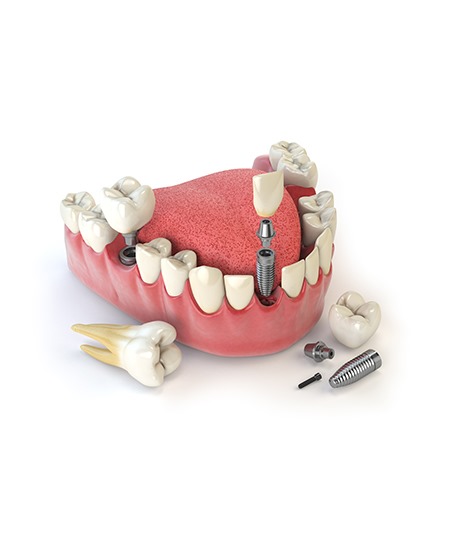
A dental implant is a small titanium post surgically placed into your jawbone to act as an artificial tooth root. Over several months, the implant fuses with the bone in a process called osseointegration, creating a stable foundation for a replacement tooth (crown), bridge, or full-arch prosthesis.
Unlike dentures or bridges, implants:
- Feel and function like natural teeth
- Don’t require support from adjacent teeth
- Stimulate bone growth and prevent the jawbone shrinkage that follows tooth loss
Can last a lifetime with proper care — significantly more durable than bridges (which typically need replacing every 10–15 years)
Benefits of Dental Implants in Marsden Park
Improved Functionality
Dental implants allow you to eat and speak with confidence, restoring functionality to your mouth. Unlike traditional dentures, implants are securely anchored to your jawbone, providing stability and support for chewing and speaking without slipping.
Enhanced Appearance
Dental implants are designed to look and feel like your natural teeth. They provide a natural-looking smile that enhances your appearance and boosts your confidence. Implants also support your facial structure, preventing the sunken appearance that can occur with missing teeth.
Long-term Durability
Dental implants are a long-lasting solution for tooth replacement. With proper care, implants can last a lifetime, making them a cost-effective option in the long run. The titanium post integrates with your jawbone, providing a stable and durable foundation for the replacement tooth.
Preservation of Jawbone
One of the significant advantages of dental implants is their ability to prevent bone loss. When a tooth is missing, the jawbone can deteriorate over time. Implants stimulate the bone, maintaining its strength and structure, and preventing the sunken facial appearance that can result from bone loss.
Types of Dental Implants
Single Tooth Implants
Single tooth implants are ideal for replacing individual missing teeth. They provide a seamless replacement that blends with your natural teeth, restoring both function and appearance.
Multiple Tooth Implants
For patients missing several teeth, multiple tooth implants are an excellent solution. These implants can support a bridge or multiple crowns, providing a stable and natural-looking replacement for multiple missing teeth.
Full Arch Implants
Full arch implants are used to replace all teeth in the upper or lower jaw. This option provides a stable and secure alternative to traditional dentures, offering improved functionality and comfort.
The Dental Implant Process
Initial Consultation
The dental implant process begins with an initial consultation. During this visit, our dental team will evaluate your oral health, discuss your treatment goals, and develop a personalised treatment plan. We will use advanced imaging techniques to assess your jawbone and determine the optimal placement for the implants.Implant Placement
The next step is the surgical placement of the implant. This procedure involves placing the titanium post into the jawbone. The surgery is performed under local anaesthesia or sedation, ensuring your comfort throughout the process.Osseointegration
After the implant is placed, a healing period is required for the implant to integrate with the jawbone. This process, known as osseointegration, typically takes several months and is crucial for the stability and success of the implant.Abutment Placement
Once the implant has integrated with the jawbone, the abutment is placed. This connector piece attaches to the implant and will hold the replacement tooth in place.Placement of the Crown
The final step is the placement of the crown, which is custom-made to match the shape, size, and colour of your natural teeth. The crown is securely attached to the abutment, completing the restoration and providing a natural-looking and functional tooth.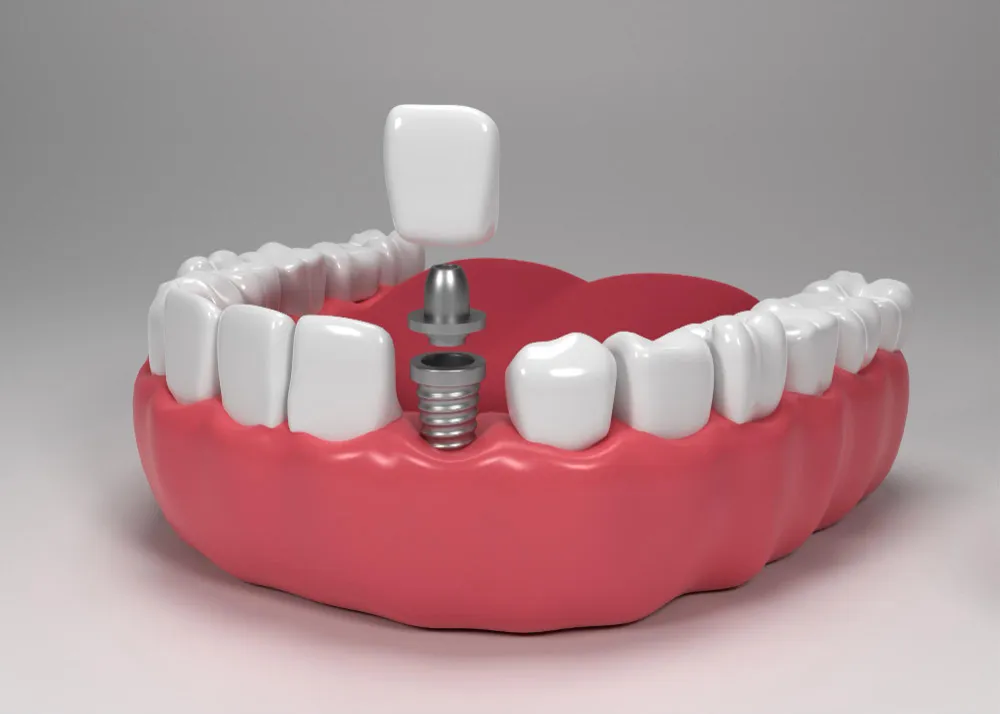
Advanced Techniques and Technologies
3D Imaging and Planning
We utilise advanced 3D imaging and planning software to ensure precise placement of your dental implants. This technology allows us to create a detailed map of your mouth, ensuring optimal placement and reducing the risk of complications.
Minimally Invasive Techniques
Our team uses minimally invasive techniques to place dental implants, reducing discomfort and recovery time. These techniques are designed to preserve as much natural bone and tissue as possible, promoting faster healing.
Caring for Your Dental Implants
Daily Oral Hygiene
Proper oral hygiene is essential for maintaining the health and longevity of your dental implants. We will provide you with detailed instructions on how to care for your implants, including brushing, flossing, and using interdental brushes to clean around the implant.
Regular Dental
Checkups Regular checkups are crucial for monitoring the health of your dental implants and ensuring they remain in optimal condition. During these visits, our team will perform professional cleanings and check for any signs of complications.
Avoiding Complications
To ensure the long-term success of your dental implants, it’s important to avoid habits that can cause damage, such as smoking and grinding your teeth. We will provide tips and advice to help you maintain your implants and prevent complications.
Patient-Centred Care
Dr. Mohamed Omar — FRACDS, Post-grad Diploma in Implants
Dr. Omar has completed a Post-grad Diploma in Dental Implants and has placed hundreds of implants at our Marsden Park clinic since opening. As a Fellow of the Royal Australasian College of Dental Surgeons (FRACDS), he holds one of the highest voluntary credentials in Australian dentistry. You can read more about his background on our about us page.
Dental Implants vs Dentures vs Bridges
Implants | Dentures | Bridges | |
|---|---|---|---|
Longevity | 25+ years (often lifetime) | 5–8 years | 10–15 years |
Bone preservation | ✅ Yes | ❌ No (bone shrinks) | ❌ No |
Requires grinding adjacent teeth | ❌ No | ❌ No | ✅ Yes |
Feels like natural teeth | ✅ Yes | ❌ Can feel loose | ✅ Yes |
Maintenance | Normal brushing + flossing | Remove & clean daily | Floss under bridge |
Upfront cost | Higher | Lower | Moderate |
Long-term cost | Lower (one-time) | Higher (replacements) | Higher (replacements) |
Insurance and Payment Options
Coverage for Dental Implants
We offer comprehensive insurance coverage for dental implants. Our team will help you navigate your insurance benefits to maximise your coverage and minimise out-of-pocket costs.
Affordable Payment Plans
For patients without insurance, we provide affordable fixed price options and flexible payment plans. We believe that everyone should have access to high-quality dental care, and we work with you to find a payment solution that fits your budget.
Ready to Restore Your Smile?
Dental implants are the gold standard for tooth replacement — and at M&M Dental Marsden Park, you have access to FRACDS-credentialled expertise, advanced imaging, and flexible payment plans to make it happen.
Book your implant consultation: 02 8631 1525 Request a consultation online
Our clinic is at 861 Richmond Road, Marsden Park NSW 2765, open 7 days a week including late weekday evenings.
This page was medically reviewed by Dr. Mohamed Omar, FRACDS — Principal Dentist, M&M Dental Care Marsden Park.
- 02 8631 1525
- info@mmdental.com.au.
- 861 Richmond Road, Marsden Park NSW 2765
- Monday – Friday: 9:00am – 10:00pm
- Saturday / Sunday: 9:00am – 05:00pm
Frequently Asked Questions
Dental implants are artificial tooth roots made of titanium that are surgically placed into the jawbone. They provide a strong foundation for fixed or removable replacement teeth. Over time, the implant integrates with the jawbone through a process called osseointegration, creating a stable base for the crown or bridge that will be attached.
Most people who are in good general health and have healthy gums and enough bone to support an implant are good candidates for dental implants. However, conditions such as uncontrolled diabetes, certain heart diseases, or heavy smoking can affect healing and may need to be managed before implant surgery. A thorough evaluation by our dental team will determine if implants are right for you.
The dental implant process typically takes several months. It begins with an initial consultation and evaluation. The implant is then surgically placed and allowed to integrate with the jawbone, which can take 3-6 months. After osseointegration, an abutment is placed, followed by the final crown. The timeline can vary depending on individual healing times and any additional procedures needed.
The dental implant procedure is usually performed under local anaesthesia, so you should not feel pain during the surgery. Some discomfort is normal after the procedure, similar to what you might experience after a tooth extraction. This can be managed with over-the-counter pain medications and typically subsides within a few days. Most patients report that the discomfort is manageable and well worth the results.
Caring for dental implants is similar to caring for natural teeth. It involves regular brushing and flossing to remove plaque and prevent gum disease. It’s also important to visit your dentist regularly for check-ups and professional cleanings. Avoiding hard foods and using a night guard if you grind your teeth can also help maintain your implants.
With proper care and maintenance, dental implants can last a lifetime. The crown attached to the implant may need to be replaced due to normal wear and tear, but the implant itself, which integrates with the jawbone, is designed to be a permanent solution. Regular dental visits and good oral hygiene practices are essential for the longevity of your implants.