
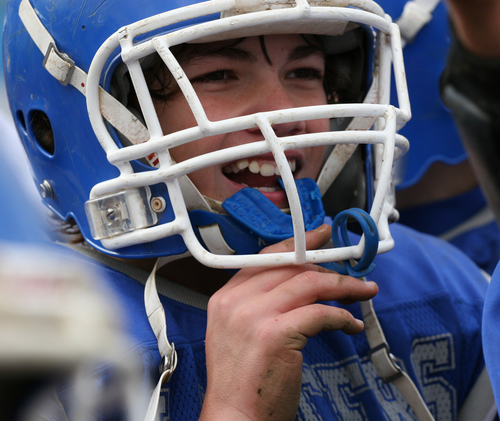
Halfway through the winter season, the mouthguard situation in most sports bags has become quietly unreliable. It is in there somewhere, it has been chewed at the edges, and it comes out for the important games and stays in the bag for training.
That is a fair description of how most mouthguards are actually used, and it points at the real issue. Custom mouthguards are not simply a better version of the shop-bought one. They solve a different problem, which is that a mouthguard nobody wants to wear protects nothing at all.
What a Mouthguard Is Actually Doing
The obvious job is the padding, and it is real: a layer of resilient material between an incoming elbow and a front tooth absorbs energy and spreads the force across a wider area rather than letting it land on one point.
The less obvious job is what happens to the lower jaw. A well-fitted guard separates the teeth slightly, so an upward impact to the chin does not drive the lower teeth into the uppers with the full force behind it. That single mechanism is why fit matters more than thickness.
For general guidance, the Australian Dental Association is a reliable source.
Both of those jobs depend entirely on the guard being in the right place at the moment of impact. A mouthguard that has shifted, or that the player has been quietly holding in position with their tongue for the whole second half, is doing considerably less than the player thinks it is.
Where the Shop-Bought Version Falls Down
The boil-and-bite guard is a genuine invention and it is better than nothing. It is also working against some fairly unhelpful physics.
| Boil-and-bite | Custom-made |
| Softened in hot water and bitten | Made from a model of the actual teeth |
| Fit depends on the bite that night | Fit is designed, not improvised |
| Thins out where it is bitten through | Thickness is controlled where it matters |
| Needs teeth clenched to stay in | Stays in place without effort |
| Often makes speech difficult | Speech and breathing stay workable |
| Frequently left in the bag | Comfortable enough to actually wear |
The clenching point is the one that undoes the whole idea. If a guard only stays put while the teeth are held together, then a player who opens their mouth to breathe hard, and everybody does, is playing without it at the exact moment they are most likely to collide with someone.
The thinning is the other structural problem. Biting into softened plastic pushes the material sideways, and it is thinnest precisely over the biting edges of the front teeth, which is where the protection was supposed to be.
The Compliance Problem Nobody Names
Ask any junior coach what happens to mouthguards over a season and the answer is consistent. They are worn at first, then worn for games only, then forgotten, and the reason is almost never carelessness.
A guard that is bulky, that makes it hard to speak, that gags a bit, or that has to be held in place is genuinely unpleasant to wear for eighty minutes. Teenagers in particular will simply stop, and they will not mention that they have stopped.
A custom mouthguard is made from an impression or scan of the actual teeth, so it locks onto them and stays there without being held. It can be made thinner where thickness is unnecessary and thicker where impact is likely, which means it protects more while feeling like less.
That is the whole argument, and it is a behavioural one rather than a material one. The protective performance of any mouthguard, however well engineered, is multiplied by the number of minutes it is actually in the mouth, and a guard that gets worn every session beats one that gets worn for finals.
Children, Growth and the Guard That No Longer Fits
Children present a particular version of this, because their mouths are moving targets. Adult teeth arrive over several years, and a guard made when the front teeth were still baby teeth will not fit the mouth that emerges eighteen months later.
That does not make a custom guard pointless for children. It makes it something to reassess at intervals, which is easily done at a routine check-up, and paediatric dentistry appointments are a sensible moment to have the fit looked at before the season starts rather than after.
Children in braces are a separate case again, and one worth raising with the dental team rather than solving in a sports shop, because a guard has to accommodate the appliance and the way the teeth are moving underneath it.
It is also worth knowing that the same custom-fitting process is used for a nightguard where somebody grinds their teeth in their sleep. The purpose is different, but the reason it works is identical: something made to the shape of the actual teeth stays where it was put.
Getting Fitted Before the Season in Marsden Park
Winter sport is well underway, and a mouthguard that has been living at the bottom of a bag since April is worth a second look.
For any player or parent looking into custom mouthguards in Marsden Park and nearby suburbs such as Riverstone, Parklea and Blacktown, a fitting appointment is quick, and it is a good moment to check that a growing mouth has not outgrown last year’s guard.
From there, the dental team can take an impression and talk through what suits the sport being played, with no pressure.
The Takeaway
A mouthguard has two jobs: it spreads the force of an impact across a wider area, and a well-fitted one separates the teeth slightly so an upward blow to the chin does not drive the lower teeth into the uppers. Both depend on the guard being in the right place at the moment of impact. A boil-and-bite guard is softened and bitten, which pushes the material thin exactly over the biting edges it was meant to protect, and it typically stays in only while the teeth are clenched, which is not what a player does while breathing hard. A custom mouthguard is made to the shape of the actual teeth, so it stays put without effort, and because it is comfortable it tends to be worn every session rather than saved for finals. The team at M&M Dental Care is happy to help, with no pressure.
Frequently Asked Questions
Are custom mouthguards better than boil-and-bite?
A custom mouthguard is made from a model of the actual teeth, so it stays in place without being held there by clenching, and its thickness can be controlled where impact is most likely. A boil-and-bite guard is bitten into shape, which thins the material over the front biting edges, and it often needs the teeth held together to stay in.
What does a sports mouthguard actually protect against?
It spreads the force of an impact across a wider area rather than allowing it to land on a single tooth, and a well-fitted guard also separates the teeth slightly so that an upward impact to the chin does not drive the lower teeth into the uppers with full force behind it.
Why do children stop wearing their mouthguards?
Usually because the guard is uncomfortable rather than because the child is careless. A bulky guard that makes speech difficult or has to be held in place is genuinely unpleasant to wear for a whole match, so it quietly stops being used. A guard that fits properly tends to be worn without the reminder.
Do children need a new mouthguard each season?
Children’s mouths change as adult teeth arrive over several years, so a guard made a season or two ago may no longer fit the mouth it was made for. Having the fit checked at a routine appointment before the season starts is a simple way to find out whether a new one is needed.
Can you wear a mouthguard with braces?
It needs to be made with the braces in mind, because the guard has to accommodate the appliance and allow for the teeth moving underneath it. This is worth raising with your dental team rather than solving with an off-the-shelf product, since fit is what determines whether a guard protects anything.
This blog is intended for general informational purposes only and does not constitute medical or dental advice. Every patient’s oral health needs are unique. Please consult a qualified dental practitioner for advice specific to your situation. M&M Dental Care encourages all patients to seek a professional assessment before commencing any dental treatment.
