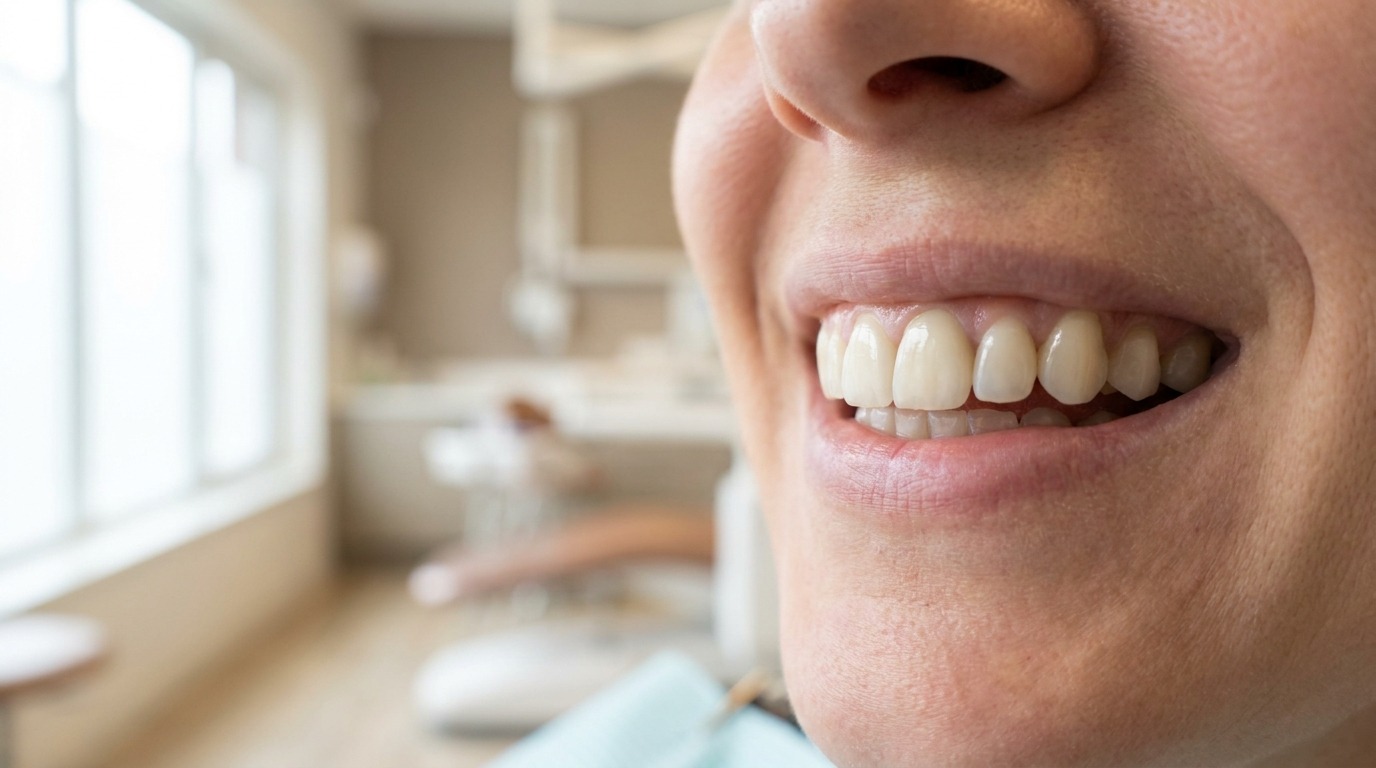
Replace Missing Teeth in Marsden Park
A single missing tooth changes more than a smile. It changes the bite, the way you chew, the way the jawbone holds its shape, and over time the position of the neighbouring teeth. At our Dentist Marsden Park practice, MM Dental replaces missing teeth with dental implants, crowns and bridges, and partial denture options for patients across Marsden Park, St Marys, Schofields and the surrounding northwest Sydney suburbs.
The right option depends on the number of teeth missing, the bone available, the health of the neighbouring teeth, your medical history, and your budget. This page walks through what happens when a tooth is left unreplaced, what your three main options are, how each is placed, and what the realistic cost picture looks like.
What happens if a missing tooth is not replaced?
Leaving a tooth space unreplaced triggers bone resorption in the jaw within 6-12 months, causes adjacent teeth to drift, and allows the opposing tooth to over-erupt into the gap. Each change makes later replacement harder and more expensive. The Better Health Channel’s overview of dental implants is a good plain-English summary of the bone-loss mechanism.
Three things happen in order, usually within the first 12-24 months:
- Bone resorption — the jawbone at the extraction site loses width and height because it no longer has a tooth root to support. The Australian Dental Association has published guidance noting visible bone loss within the first year after extraction in most patients.
- Drift — the teeth on either side lean into the space, creating new food traps and setting up gum problems and decay in previously healthy teeth.
- Over-eruption — the tooth in the opposite arch slowly extrudes looking for contact. In severe cases this tooth is eventually lost.
The longer a gap is left, the more the case drifts from a simple implant into a multi-discipline problem: orthodontics to upright drifted teeth, bone grafting to rebuild lost height, gum surgery to recover soft tissue. None of this is impossible. It is just avoidable.
What are the options for replacing a missing tooth?
The three core options for a missing tooth are a dental implant with a crown, a tooth-supported bridge, and a removable partial denture. Each has clear strengths, clear limits, and a different cost profile. There is no universally “best” option — the right one depends on the case.
A quick comparison:
| Option | Best for | Lifespan | Effect on neighbours | Bone preservation |
|---|---|---|---|---|
| Implant + crown | Single or multiple gaps with enough bone | 15-25+ years | None — stands alone | Preserves bone |
| Bridge (conventional) | 1-2 adjacent gaps with healthy abutment teeth | 10-15 years | Crowns on neighbouring teeth | Does not preserve bone under the gap |
| Resin-bonded (Maryland) bridge | Single front-tooth gap in a low-bite-force area | 7-10 years | Minimal prep on abutments | Does not preserve bone |
| Removable partial denture | Multiple gaps, budget-conscious, or temporary | 5-8 years | Clasps on neighbouring teeth | Does not preserve bone |
The Better Health Channel page on dental bridges is worth reading for how bridgework actually works.
Dental implants vs bridges vs dentures — which one wins?
A dental implant is the gold-standard option for a single missing tooth when the bone and budget allow, a bridge is the right call when the neighbouring teeth already need crowns, and a partial denture is the right call when multiple teeth are missing or the case is temporary.
Three quick examples from our chair at Marsden Park:
- A 35-year-old who lost a front tooth to a sports injury, with healthy neighbours and good bone. Single implant + crown. The neighbours stay untouched, the bone is preserved, the result is indistinguishable from a natural tooth in 10 years.
- A 60-year-old who has already had crowns on both adjacent teeth, with the middle one now failing. Bridge. The neighbours are already prepared; a bridge uses the existing work and avoids a second surgical site.
- A 72-year-old on a pension who has lost three lower-back teeth and is not a surgery candidate. Partial denture. A chrome-cobalt framework restores chewing function for a fraction of the implant cost.
Bone preservation is the single most important long-term consideration and the one most patients are not told about. Only an implant actively preserves bone. Everything else leaves the underlying bone to resorb.
How does a dental implant actually work?
A dental implant replaces a missing tooth root with a small titanium post that fuses to the jawbone (osseointegration), then carries a custom-made crown on top. The result is a tooth that looks, functions and is cleaned like a natural one. The Australian Dental Association publishes 10-year survival data showing dental implants perform in the 95-98% range for properly planned cases.
The process at MM Dental:
- Assessment — a CBCT (3D cone-beam) scan measures bone height, width and density. We check sinus position for upper-back implants and nerve position for lower implants. Medical history matters: uncontrolled diabetes, bisphosphonate use, and active periodontal disease are all flagged.
- Implant placement — a 30- to 60-minute surgical procedure under local anaesthetic. The titanium post is placed through a small gum flap. Most patients report less post-op discomfort than an extraction.
- Osseointegration — a 6- to 12-week healing period during which the bone fuses to the implant. A healing abutment sits under the gum. You wear a temporary tooth or go without, depending on the location.
- Crown fabrication — once integrated, we take a digital impression and the lab fabricates a custom abutment and crown. The crown is either cemented or screw-retained.
- Maintenance — a 3-month review, then 6-monthly hygiene visits. An implant is only failure-proof with regular scale and clean and good home care.
Healthdirect’s dental-care page explains the titanium-and-bone biology in more depth for patients who want the science.
What is the difference between one missing tooth and several?
A single missing tooth is usually treated with one implant + crown, two or three adjacent missing teeth are often restored with two implants supporting a bridge, and a fully edentulous arch is typically treated with an All-on-4 or implant-retained overdenture. The principle is the same in every case — titanium posts fused to bone carrying some form of prosthesis.
Practical differences:
- Single missing tooth — one implant, one crown, one surgical site, ~3-4 months start to finish.
- Two to three adjacent missing teeth — usually two implants supporting a three-unit bridge, depending on span and bone.
- Full arch (All-on-4, All-on-6) — four to six implants supporting a fixed full-arch prosthesis. Same-day teeth are possible in selected cases, though we prefer delayed loading where bone quality is uncertain.
- Edentulous arch with overdenture — two to four implants with locators or a bar; the denture clips on and is removable for cleaning. Cheaper than All-on-4, and life-changing for patients who have struggled with a loose full denture.
How much does tooth replacement cost in Marsden Park?
In Australia, a single dental implant including the crown typically costs $3,000 to $6,500, a three-unit bridge costs $2,500 to $5,500, and an acrylic partial denture costs $1,000 to $2,500. The range reflects the variables: bone condition, need for grafting, materials, lab fees, and any preparatory work. Healthdirect’s dental-care overview is the standard government reference for the cost framework, and the ADA publishes annual fee-survey data for practitioners.
Most Australian extras cover includes a “major dental” benefit that pays a percentage back after the annual threshold. Implants and bridges usually fall under this, with annual limits typically $1,000-$2,000. Dentures follow a fixed rebate schedule set by the fund.
The honest answer for a Marsden Park patient: book a consultation. The scan, the discussion, and a written quote take about 45 minutes. We can run a health-fund check on the day so you know the out-of-pocket figure before any commitment.
Can missing teeth actually affect general health?
Yes — missing teeth are linked to reduced dietary variety, lower intake of fibre and protein, measurable loss of jawbone, and visible bite changes that age the face earlier than expected. The Australian Dental Association has been increasingly vocal about the mouth-body link, and Better Health Channel summaries cover the dietary impact.
The chain of effects: patients with multiple missing posterior teeth shift to softer, more processed foods, dropping fibre and protein. Bone loss compounds — by year 10, a simple implant case may need grafting first, adding $1,500-$3,000. In severe cases of multiple lost posterior teeth, the bite over-closes, the face shortens, the chin rotates forward, and the patient looks visibly older. Reversible with the right restoration.
The most useful framing for a Marsden Park patient: replacing a missing tooth is not just a cosmetic or comfort decision. It is a long-term health decision.
Frequently asked questions (supplementary)
How long do dental implants last? The titanium post often lasts a lifetime. The crown on top typically needs replacement at 10-15 years due to wear.
Is the implant surgery painful? Most patients describe it as less uncomfortable than the extraction that preceded it. Local anaesthetic, mild discomfort for 2-3 days, normal activities within a week.
What if I do not have enough bone? Bone grafting is routine. A separate procedure 3-6 months before implant placement rebuilds the site.
Can smokers have implants? Yes, but with materially higher failure rates. We require a serious pre-surgery conversation, and many smokers choose to quit first to improve the odds.
Ready to start?
The fastest path to a clear plan is a 45-minute consultation at our Marsden Park clinic. We will scan, walk through your options with real numbers, and give you a written quote. We regularly see patients from neighbouring St Marys, Schofields and Rouse Hill. Book online or call our Dentist Marsden Park practice.