
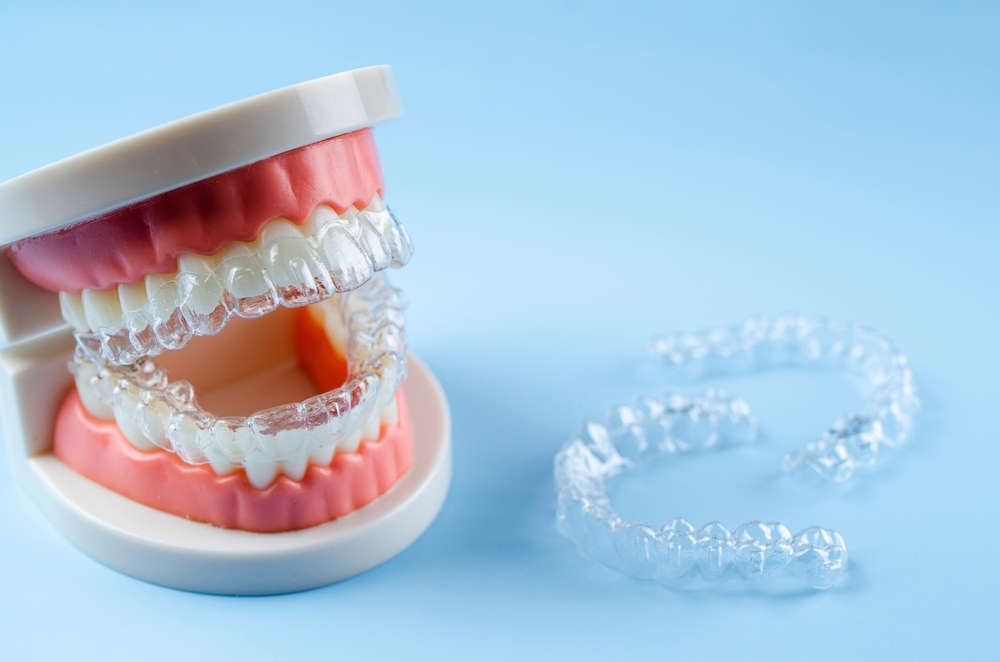
Most people arrive at the orthodontic conversation having already decided. They want clear aligners, because they are discreet and removable, and braces feel like something belonging to a previous chapter of life.
That preference is entirely reasonable, and often it is perfectly achievable. What is worth knowing is that the decision is not really made on appearance or willpower. It is made on the type of movement your particular teeth need, and that is a more interesting question than it sounds.
Teeth Move Because Bone Rebuilds
Orthodontics is often described as pushing teeth into place, which makes it sound like furniture removal. What actually happens is considerably more elegant, and it explains why the treatment cannot be rushed.
A tooth sits in a socket, held by a ligament. Apply gentle, sustained pressure, and the bone on the side being pressed towards is resorbed while new bone is laid down on the side being pulled away from. The tooth does not slide through bone; the bone rearranges itself around the tooth.
For general guidance, the Australian Dental Association is a reliable source.
This is why light continuous force works and heavy intermittent force does not, and why an appointment cannot simply move a tooth further to save time. The rate is set by how quickly bone can remodel, which is a biological limit rather than a technical one.
Two Ways of Applying the Same Force
Both systems are doing the same underlying job. They differ in how they grip the tooth and therefore in what kinds of movement they can deliver.
| Clear aligners | Braces |
| A tray that grips the crown | Brackets bonded to each tooth |
| Removable for eating and cleaning | Fixed in place for the duration |
| Force comes from tray shape | Force comes from the archwire |
| Excellent for tipping and aligning | Strong control of root position |
| Depends on being worn as directed | Works whether you think about it or not |
| Very discreet | Ceramic options blend with the teeth |
The important row is the fourth one. An aligner grips the visible crown of the tooth and is very effective at tipping and aligning it. Certain movements, particularly bodily movement of a tooth through bone, rotating a rounded tooth, or altering the position of the root, ask more of the grip than a tray can always provide.
Braces attach to each tooth individually and connect them to a wire, which gives fine three-dimensional control over the root as well as the crown. That is why complex cases still tend towards braces, and it is not a matter of the technology being older.
The Twenty-Two Hour Truth
There is a second factor and it is entirely within the patient’s control, which is what makes it the deciding one in a great many cases.
An aligner only applies force while it is in the mouth. The treatment plan assumes the trays are worn for the great majority of each day and night, and that assumption is baked into every stage of the sequence, since each tray is designed to hand over to the next one at a particular point.
Take them out for a long lunch, an evening, a weekend, and the teeth do not simply pause. They begin drifting back towards where they were, so the next tray no longer fits the mouth it was made for, and progress stalls or the plan has to be reworked.
Braces have no such requirement, which is their quiet advantage. The wire works overnight and during dinner and while you have forgotten about it entirely, and for some people, particularly younger teenagers with a great deal else going on, that is the honest reason braces are the better fit.
How the Decision Is Actually Made
An orthodontic assessment starts with records rather than preferences: photographs, a scan or impressions, and imaging showing the roots and the underlying bone. That is what reveals the movements required, and the movements required are what narrow the options.
Many cases can be treated either way, and where that is true, preference genuinely does decide it, and clear aligners are a very appealing answer. Some cases suit aligners particularly well. Some involve movements that braces control more predictably, and being told so is useful information rather than a disappointment.
There is a middle ground worth knowing about too. Ceramic braces are made from tooth-coloured materials that blend with the teeth, and self-ligating brackets use a clip rather than elastic bands, which reduces friction. Orthodontics is not a choice between two extremes.
Whichever route is taken, the finish is the same. Once the teeth have been moved, a retainer holds them while the bone around them settles into its new arrangement, and that stage matters just as much as the moving did.
Weighing Up the Options in Marsden Park
The most useful thing you can bring to this decision is an open mind about the method and a clear view of the outcome you want.
For anyone considering clear aligners in Marsden Park and nearby suburbs such as Riverstone, Parklea and Blacktown, an orthodontic consultation with imaging establishes which movements are needed and therefore which approaches can deliver them.
From there, the dental team can talk through what would suit your teeth and your life, with no pressure.
The Takeaway
Teeth move because bone remodels around them, not because they are pushed through it, which is why light continuous force works and why treatment cannot be hurried. Clear aligners and braces both apply that force; they differ in how they grip the tooth. An aligner grips the visible crown and is very effective at tipping and aligning, while braces attach to each tooth and connect to a wire, giving finer control over root position, which is why more complex movements still tend towards braces. The second factor is wear time: an aligner only works while it is in the mouth, and the whole sequence assumes it stays there. Records and imaging, rather than preference alone, reveal which movements are needed. The team at M&M Dental Care is happy to explain, with no pressure.
Frequently Asked Questions
How do clear aligners actually move teeth?
Each tray is shaped slightly differently from the current position of the teeth, so wearing it applies gentle, sustained pressure. That pressure causes the bone on one side of the tooth to resorb while new bone forms on the other, so the tooth moves as the bone rearranges itself around it rather than sliding through it.
Are braces better than clear aligners?
Neither is universally preferable; they suit different movements. Aligners grip the crown of the tooth and handle tipping and aligning very effectively. Braces attach to each tooth and connect to a wire, giving finer control of root position, so cases needing bodily movement or significant rotation often suit braces better.
How long do I need to wear clear aligners each day?
The treatment plan assumes the trays are worn for the great majority of every day and night, and each tray is designed to hand over to the next at a particular point. Leaving them out for long periods allows teeth to drift back, so the next tray no longer fits and progress stalls.
What decides whether I can have aligners?
The movements your teeth actually need. An assessment using photographs, a scan or impressions, and imaging of the roots and bone establishes what has to happen. Many cases can be treated either way, in which case preference decides it, but some movements are controlled more predictably with braces.
Do I need a retainer after treatment?
Yes, whichever method is used. Once teeth have been moved, the bone and fibres around them need time to settle into the new arrangement, and until they do the teeth are inclined to drift back. A retainer holds the result while that settling happens, and it is as much a part of treatment as the moving was.
This blog is intended for general informational purposes only and does not constitute medical or dental advice. Every patient’s oral health needs are unique. Please consult a qualified dental practitioner for advice specific to your situation. M&M Dental Care encourages all patients to seek a professional assessment before commencing any dental treatment.


